
Blog
Short articles exploring patterns and quirks across the dictionary.
-
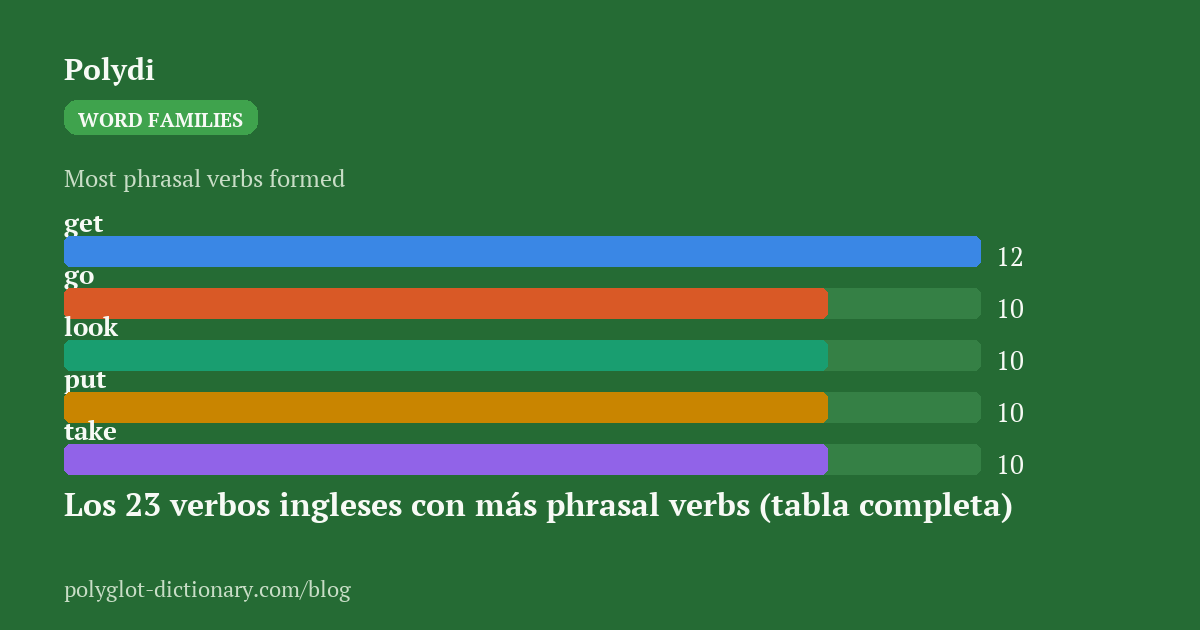
Los 23 verbos ingleses con más phrasal verbs (tabla completa)
Analizamos los verbos ingleses de este diccionario que forman cuatro o más combinaciones distintas con una partícula -- 23 en total, desde «get» (doce) hasta ocho verbos empatados con cuatro. Esta es la clasificación completa, con un enlace a cada artículo según lo vamos publicando. October 24, 2026 -
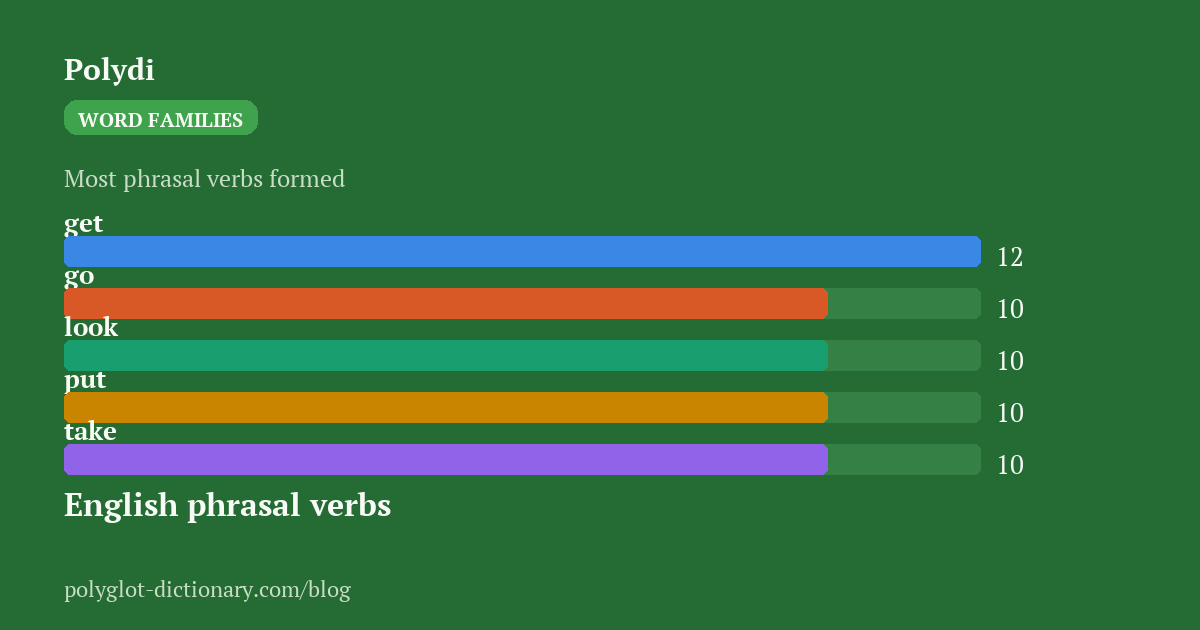
सबसे ज़्यादा phrasal verbs वाली 23 अंग्रेज़ी क्रियाएँ (पूरी तालिका)
हमने इस शब्दकोश की उन अंग्रेज़ी क्रियाओं का विश्लेषण किया जो किसी पार्टिकल के साथ चार या ज़्यादा अलग मेल बनाती हैं -- कुल 23, «get» (बारह) से लेकर चार-चार मेलों पर बराबरी वाली आठ क्रियाओं तक। यह पूरी रैंकिंग है, हर लेख के लिंक के साथ। October 24, 2026 -
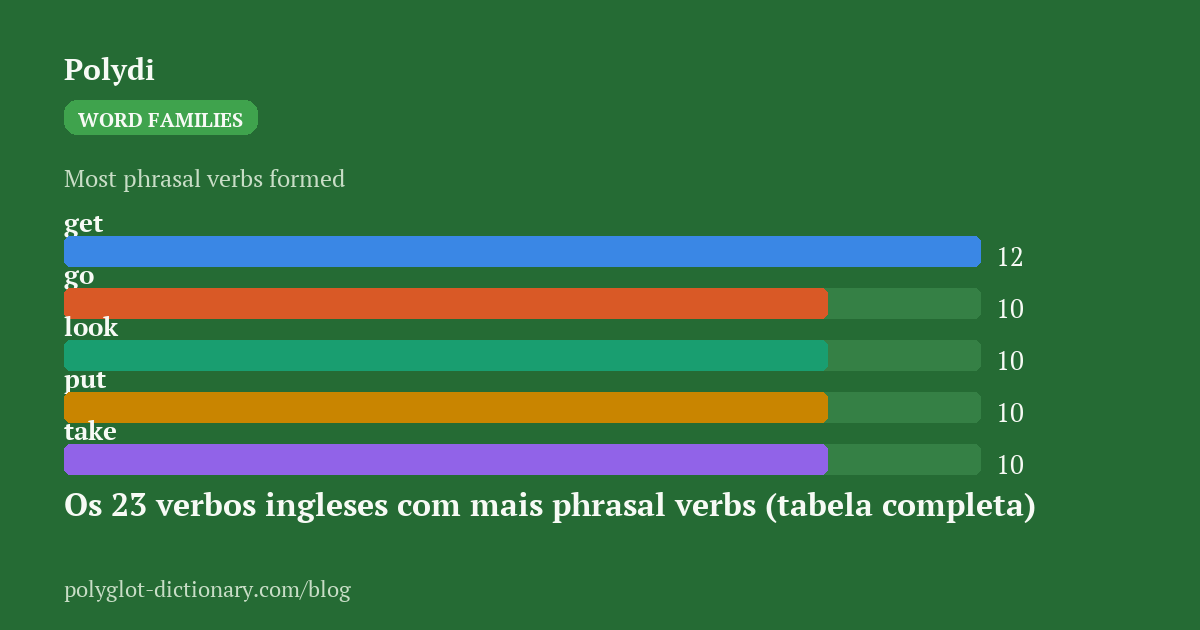
Os 23 verbos ingleses com mais phrasal verbs (tabela completa)
Analisamos os verbos ingleses deste dicionário que formam quatro ou mais combinações diferentes com uma partícula -- 23 no total, de «get» (doze) até oito verbos empatados com quatro. Esta é a classificação completa, com um link para cada artigo. October 24, 2026 -
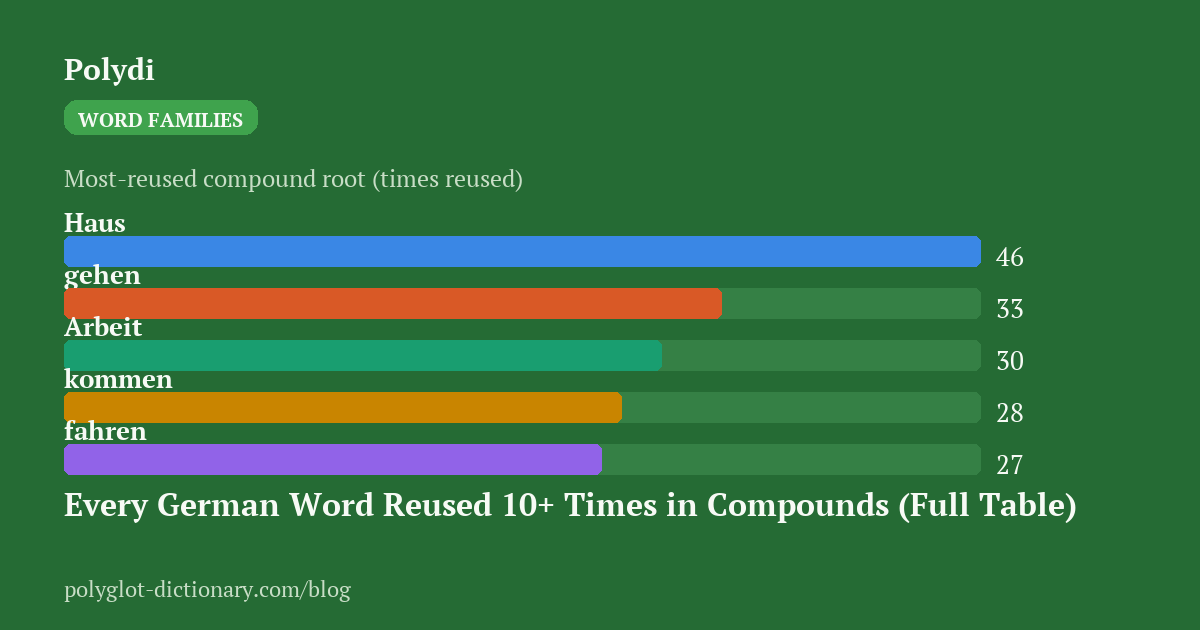
Every German Word Reused 10+ Times in Compounds (Full Table)
The full ranking behind our Haus/gehen/Arbeit articles: every German word this dictionary found reused in 10 or more compounds, with its reuse count, dominant part of speech, and a link once we've written it up. October 21, 2026
More articles
-

Water Is Always Blue: Colour-Coding Chinese Characters
A first look at a new experimental feature: five of the most common Chinese characters, each given a fixed colour everywhere they appear — standalone or buried inside a longer word. November 10, 2026 -
Break down, break up, break out: seis formas de usar «break»
«Break» forma seis verbos distintos según la palabra que lo siga, y la mitad de ellos describen alguna forma de entrar, escapar o estallar por la fuerza. October 24, 2026 -
Bring up, bring about, bring down: cinco formas de usar «bring»
«Bring» forma cinco verbos distintos según la palabra que lo siga, y dos de ellos comparten la idea de provocar un efecto -- para bien o para mal. October 24, 2026 -
Call off, call for, call on: cinco formas de usar «call»
«Call» forma cinco verbos distintos según la palabra que lo siga, y solo dos de ellos tienen que ver literalmente con hacer una llamada telefónica. October 24, 2026 -
Carry on, carry out, carry away: cuatro formas de usar «carry»
«Carry» forma cuatro verbos distintos según la palabra que lo siga, divididos en dos parejas claras: continuar algo, y trasladarlo. October 24, 2026 -
Come across, come up with, come down with: nueve formas de usar «come»
«Come» forma nueve verbos distintos según la palabra que lo siga, y un tercio de ellos conserva la idea de llegar o visitar un lugar. October 24, 2026 -
Cut off, cut down on, cut out: cuatro formas de usar «cut»
«Cut» forma cuatro verbos distintos según la palabra que lo siga, divididos en dos parejas: interrumpir algo de golpe, y reducirlo poco a poco. October 24, 2026 -
Fall apart, fall through, fall for: cinco formas de usar «fall»
«Fall» forma cinco verbos distintos según la palabra que lo siga, y casi todos conservan algo del significado original: una caída, literal o figurada. October 24, 2026 -
Get up, get over, get along: el verbo inglés con más significados ocultos
«Get» se combina con doce palabras distintas para formar doce verbos con significados completamente distintos -- más que cualquier otro verbo en este diccionario. Los agrupamos por significado para que sean más fáciles de recordar. October 24, 2026 -
Give up, give in, give away: cinco formas de usar «give»
«Give» forma cinco verbos distintos según la palabra que lo siga, y dos de ellos son casi sinónimos: rendirse ante algo. October 24, 2026 -
Go on, go off, go through: diez formas de que «go» deje de significar «ir»
«Go» forma diez verbos distintos según la palabra que lo siga, y la mayoría no tiene nada que ver con «ir» a ningún lado. Los agrupamos por significado para que sean más fáciles de recordar. October 24, 2026 -
Hold on, hold up, hold back: cinco formas de usar «hold»
«Hold» forma cinco verbos distintos según la palabra que lo siga, y casi todos giran en torno a la misma idea física: aguantar, resistir, o detener algo. October 24, 2026 -
Keep up, keep on, keep away: cuatro formas de usar «keep»
«Keep» forma cuatro verbos distintos según la palabra que lo siga, y se dividen en dos parejas de casi-sinónimos: seguir haciendo algo, o mantenerse lejos de algo. October 24, 2026 -
Look up, look after, look down on: diez formas de mirar en inglés
«Look» forma diez verbos distintos según la palabra que lo siga, y varios de ellos son pares de opuestos. Los agrupamos por significado para que sean más fáciles de recordar. October 24, 2026 -
Make up, make up for, make off with: cuatro formas de usar «make»
«Make» forma cuatro verbos distintos según la palabra que lo siga, y dos de ellos comparten literalmente la misma partícula base: «up». October 24, 2026 -
Pass away, pass out, pass on: cuatro formas de usar «pass»
«Pass» forma cuatro verbos distintos según la palabra que lo siga. Dos de ellos son formas suaves de hablar de perder la consciencia -- o la vida. October 24, 2026 -
Pull out, pull over, pull off: cuatro formas de usar «pull»
«Pull» forma cuatro verbos distintos según la palabra que lo siga, divididos en dos parejas: detenerse o retirarse, y lograr algo contra todo pronóstico. October 24, 2026 -
Put on, put off, put up with: diez formas de usar «put»
«Put» forma diez verbos distintos según la palabra que lo siga. La mitad tiene que ver, de alguna forma, con colocar algo en su lugar -- literal o figuradamente. October 24, 2026 -
Roll up, roll out, roll in: cuatro formas de usar «roll»
«Roll» forma cuatro verbos distintos según la palabra que lo siga, y se dividen limpiamente entre el movimiento físico de rodar y su uso figurado para lanzamientos y llegadas masivas. October 24, 2026 -
Run out of, run into, run through: seis formas de usar «run»
«Run» forma seis verbos distintos según la palabra que lo siga, repartidos en tres parejas exactas de dos. October 24, 2026 -
Set up, set off, set aside: cinco formas de usar «set»
«Set» forma cinco verbos distintos según la palabra que lo siga, y dos parejas de dos cubren casi todos: empezar algo, y establecerlo de forma permanente. October 24, 2026 -
Stand up, stand for, stand by: cuatro formas de usar «stand»
«Stand» forma cuatro verbos distintos según la palabra que lo siga, el último de esta serie. Dos de ellos describen significar algo; los otros dos, mantenerse firme junto a alguien o algo. October 24, 2026 -
Take off, take over, take after: diez formas de usar «take»
«Take» forma diez verbos distintos según la palabra que lo siga. Dos grupos de tres se reparten la mayoría: empezar algo nuevo, y separar o sacar algo de su sitio. October 24, 2026 -
Turn on, turn down, turn into: ocho formas de usar «turn»
«Turn» forma ocho verbos distintos según la palabra que lo siga, repartidos exactamente en cuatro parejas de dos. October 24, 2026 -
Break down, break up, break out: «break» के छह इस्तेमाल
«Break» अपने बाद आने वाले शब्द के हिसाब से छह अलग क्रियाएँ बनाता है, और उनमें से आधी किसी न किसी तरह ज़ोर से अंदर घुसने, भागने या फूट पड़ने के बारे में हैं। October 24, 2026 -
Bring up, bring about, bring down: «bring» के पाँच इस्तेमाल
«Bring» अपने बाद आने वाले शब्द के हिसाब से पाँच अलग क्रियाएँ बनाता है, और उनमें से दो में कोई असर पैदा करने का भाव है -- अच्छा या बुरा। October 24, 2026 -
Call off, call for, call on: «call» के पाँच इस्तेमाल
«Call» अपने बाद आने वाले शब्द के हिसाब से पाँच अलग क्रियाएँ बनाता है, और उनमें से सिर्फ़ दो का सच में फ़ोन करने से संबंध है। October 24, 2026 -
Carry on, carry out, carry away: «carry» के चार इस्तेमाल
«Carry» अपने बाद आने वाले शब्द के हिसाब से चार अलग क्रियाएँ बनाता है, जो दो साफ़ जोड़ियों में बँटती हैं: किसी काम को जारी रखना, और उसे आगे ले जाना। October 24, 2026 -
Come across, come up with, come down with: «come» के नौ इस्तेमाल
«Come» अपने बाद आने वाले शब्द के हिसाब से नौ अलग क्रियाएँ बनाता है, और उनमें से एक-तिहाई में किसी जगह पहुँचने या मिलने जाने का भाव बचा है। October 24, 2026 -
Cut off, cut down on, cut out: «cut» के चार इस्तेमाल
«Cut» अपने बाद आने वाले शब्द के हिसाब से चार अलग क्रियाएँ बनाता है, जो दो जोड़ियों में बँटती हैं: किसी चीज़ को एकदम रोक देना, और उसे धीरे-धीरे कम करना। October 24, 2026 -
Fall apart, fall through, fall for: «fall» के पाँच इस्तेमाल
«Fall» अपने बाद आने वाले शब्द के हिसाब से पाँच अलग क्रियाएँ बनाता है, और लगभग सबमें मूल अर्थ कुछ बचा है: गिरना, शाब्दिक या लाक्षणिक। October 24, 2026 -
Get up, get over, get along: सबसे ज़्यादा छिपे अर्थों वाली अंग्रेज़ी क्रिया
«Get» बारह अलग शब्दों के साथ मिलकर बारह क्रियाएँ बनाता है, जिनके अर्थ बिल्कुल अलग हैं -- इस शब्दकोश की किसी भी और क्रिया से ज़्यादा। याद रखना आसान हो, इसलिए हमने उन्हें अर्थ के हिसाब से समूहों में बाँटा है। October 24, 2026 -
Give up, give in, give away: «give» के पाँच इस्तेमाल
«Give» अपने बाद आने वाले शब्द के हिसाब से पाँच अलग क्रियाएँ बनाता है, और उनमें से दो लगभग पर्याय हैं: किसी चीज़ के आगे हार मान लेना। October 24, 2026 -
Go on, go off, go through: दस तरीक़े जिनमें «go» का मतलब «जाना» नहीं रहता
«Go» अपने बाद आने वाले शब्द के हिसाब से दस अलग क्रियाएँ बनाता है, और ज़्यादातर का कहीं «जाने» से कोई लेना-देना नहीं। याद रखना आसान हो, इसलिए हमने उन्हें अर्थ के हिसाब से समूहों में बाँटा है। October 24, 2026 -
Hold on, hold up, hold back: «hold» के पाँच इस्तेमाल
«Hold» अपने बाद आने वाले शब्द के हिसाब से पाँच अलग क्रियाएँ बनाता है, और लगभग सब एक ही शारीरिक भाव के आस-पास घूमती हैं: थामे रहना, टिके रहना, या किसी चीज़ को रोकना। October 24, 2026 -
Keep up, keep on, keep away: «keep» के चार इस्तेमाल
«Keep» अपने बाद आने वाले शब्द के हिसाब से चार अलग क्रियाएँ बनाता है, जो लगभग-पर्यायों की दो जोड़ियों में बँटती हैं: कुछ करते रहना, या किसी चीज़ से दूर रहना। October 24, 2026 -
Look up, look after, look down on: अंग्रेज़ी में देखने के दस तरीक़े
«Look» अपने बाद आने वाले शब्द के हिसाब से दस अलग क्रियाएँ बनाता है, और उनमें से कई उलटे अर्थों की जोड़ियाँ हैं। याद रखना आसान हो, इसलिए हमने उन्हें अर्थ के हिसाब से समूहों में बाँटा है। October 24, 2026 -
Make up, make up for, make off with: «make» के चार इस्तेमाल
«Make» अपने बाद आने वाले शब्द के हिसाब से चार अलग क्रियाएँ बनाता है, और उनमें से दो में बिल्कुल एक ही मूल पार्टिकल है: «up»। October 24, 2026 -
Pass away, pass out, pass on: «pass» के चार इस्तेमाल
«Pass» अपने बाद आने वाले शब्द के हिसाब से चार अलग क्रियाएँ बनाता है। उनमें से दो होश -- या जान -- जाने की बात नरमी से कहने के तरीक़े हैं। October 24, 2026 -
Pull out, pull over, pull off: «pull» के चार इस्तेमाल
«Pull» अपने बाद आने वाले शब्द के हिसाब से चार अलग क्रियाएँ बनाता है, जो दो जोड़ियों में बँटती हैं: रुकना या पीछे हटना, और सारे अंदाज़ों के उलट कुछ कर दिखाना। October 24, 2026 -
Put on, put off, put up with: «put» के दस इस्तेमाल
«Put» अपने बाद आने वाले शब्द के हिसाब से दस अलग क्रियाएँ बनाता है। आधी किसी न किसी रूप में किसी चीज़ को उसकी जगह रखने से जुड़ी हैं -- शाब्दिक या लाक्षणिक रूप से। October 24, 2026 -
Roll up, roll out, roll in: «roll» के चार इस्तेमाल
«Roll» अपने बाद आने वाले शब्द के हिसाब से चार अलग क्रियाएँ बनाता है, जो साफ़-साफ़ बँटती हैं: लुढ़कने की शारीरिक हलचल, और लॉन्च या भारी मात्रा में आने के लिए उसका लाक्षणिक इस्तेमाल। October 24, 2026 -
Run out of, run into, run through: «run» के छह इस्तेमाल
«Run» अपने बाद आने वाले शब्द के हिसाब से छह अलग क्रियाएँ बनाता है, जो ठीक दो-दो की तीन जोड़ियों में बँटी हैं। October 24, 2026 -
Set up, set off, set aside: «set» के पाँच इस्तेमाल
«Set» अपने बाद आने वाले शब्द के हिसाब से पाँच अलग क्रियाएँ बनाता है, और दो-दो की दो जोड़ियाँ लगभग सबको समेट लेती हैं: कुछ शुरू करना, और उसे स्थायी रूप से स्थापित करना। October 24, 2026 -
Stand up, stand for, stand by: «stand» के चार इस्तेमाल
«Stand» अपने बाद आने वाले शब्द के हिसाब से चार अलग क्रियाएँ बनाता है, और यह इस सीरीज़ की आख़िरी क्रिया है। दो किसी चीज़ का मतलब होने को बताती हैं; बाक़ी दो किसी व्यक्ति या चीज़ के साथ डटे रहने को। October 24, 2026 -
Take off, take over, take after: «take» के दस इस्तेमाल
«Take» अपने बाद आने वाले शब्द के हिसाब से दस अलग क्रियाएँ बनाता है। तीन-तीन के दो समूह ज़्यादातर को समेटते हैं: कुछ नया शुरू करना, और किसी चीज़ को उसकी जगह से अलग करना या निकालना। October 24, 2026 -
Turn on, turn down, turn into: «turn» के आठ इस्तेमाल
«Turn» अपने बाद आने वाले शब्द के हिसाब से आठ अलग क्रियाएँ बनाता है, जो ठीक दो-दो की चार जोड़ियों में बँटी हैं। October 24, 2026 -
Break down, break up, break out: seis jeitos de usar «break»
«Break» forma seis verbos diferentes conforme a palavra que vem depois, e metade deles descreve alguma forma de entrar, escapar ou estourar à força. October 24, 2026 -
Bring up, bring about, bring down: cinco jeitos de usar «bring»
«Bring» forma cinco verbos diferentes conforme a palavra que vem depois, e dois deles compartilham a ideia de provocar um efeito -- para o bem ou para o mal. October 24, 2026 -
Call off, call for, call on: cinco jeitos de usar «call»
«Call» forma cinco verbos diferentes conforme a palavra que vem depois, e só dois deles têm a ver literalmente com fazer uma ligação. October 24, 2026 -
Carry on, carry out, carry away: quatro jeitos de usar «carry»
«Carry» forma quatro verbos diferentes conforme a palavra que vem depois, divididos em dois pares claros: continuar algo e transferi-lo. October 24, 2026 -
Come across, come up with, come down with: nove jeitos de usar «come»
«Come» forma nove verbos diferentes conforme a palavra que vem depois, e um terço deles conserva a ideia de chegar ou visitar um lugar. October 24, 2026 -
Cut off, cut down on, cut out: quatro jeitos de usar «cut»
«Cut» forma quatro verbos diferentes conforme a palavra que vem depois, divididos em dois pares: interromper algo de repente e reduzi-lo aos poucos. October 24, 2026 -
Fall apart, fall through, fall for: cinco jeitos de usar «fall»
«Fall» forma cinco verbos diferentes conforme a palavra que vem depois, e quase todos conservam algo do significado original: uma queda, literal ou figurada. October 24, 2026 -
Get up, get over, get along: o verbo inglês com mais significados escondidos
«Get» se combina com doze palavras diferentes para formar doze verbos com significados completamente diferentes -- mais que qualquer outro verbo deste dicionário. Agrupamos por significado para ficar mais fácil de lembrar. October 24, 2026 -
Give up, give in, give away: cinco jeitos de usar «give»
«Give» forma cinco verbos diferentes conforme a palavra que vem depois, e dois deles são quase sinônimos: render-se diante de algo. October 24, 2026 -
Go on, go off, go through: dez jeitos de «go» deixar de significar «ir»
«Go» forma dez verbos diferentes conforme a palavra que vem depois, e a maioria não tem nada a ver com «ir» a lugar nenhum. Agrupamos por significado para ficar mais fácil de lembrar. October 24, 2026 -
Hold on, hold up, hold back: cinco jeitos de usar «hold»
«Hold» forma cinco verbos diferentes conforme a palavra que vem depois, e quase todos giram em torno da mesma ideia física: aguentar, resistir ou segurar algo. October 24, 2026 -
Keep up, keep on, keep away: quatro jeitos de usar «keep»
«Keep» forma quatro verbos diferentes conforme a palavra que vem depois, e eles se dividem em dois pares de quase sinônimos: continuar fazendo algo, ou manter-se longe de algo. October 24, 2026 -
Look up, look after, look down on: dez jeitos de olhar em inglês
«Look» forma dez verbos diferentes conforme a palavra que vem depois, e vários deles são pares de opostos. Agrupamos por significado para ficar mais fácil de lembrar. October 24, 2026 -
Make up, make up for, make off with: quatro jeitos de usar «make»
«Make» forma quatro verbos diferentes conforme a palavra que vem depois, e dois deles compartilham literalmente a mesma partícula base: «up». October 24, 2026 -
Pass away, pass out, pass on: quatro jeitos de usar «pass»
«Pass» forma quatro verbos diferentes conforme a palavra que vem depois. Dois deles são formas suaves de falar de perder a consciência -- ou a vida. October 24, 2026 -
Pull out, pull over, pull off: quatro jeitos de usar «pull»
«Pull» forma quatro verbos diferentes conforme a palavra que vem depois, divididos em dois pares: parar ou retirar-se, e conseguir algo contra todas as expectativas. October 24, 2026 -
Put on, put off, put up with: dez jeitos de usar «put»
«Put» forma dez verbos diferentes conforme a palavra que vem depois. Metade tem a ver, de algum jeito, com colocar algo no lugar -- literal ou figuradamente. October 24, 2026 -
Roll up, roll out, roll in: quatro jeitos de usar «roll»
«Roll» forma quatro verbos diferentes conforme a palavra que vem depois, e eles se dividem certinho entre o movimento físico de rolar e o uso figurado para lançamentos e chegadas em massa. October 24, 2026 -
Run out of, run into, run through: seis jeitos de usar «run»
«Run» forma seis verbos diferentes conforme a palavra que vem depois, distribuídos em três pares exatos. October 24, 2026 -
Set up, set off, set aside: cinco jeitos de usar «set»
«Set» forma cinco verbos diferentes conforme a palavra que vem depois, e dois pares cobrem quase todos: começar algo e estabelecê-lo de forma permanente. October 24, 2026 -
Stand up, stand for, stand by: quatro jeitos de usar «stand»
«Stand» forma quatro verbos diferentes conforme a palavra que vem depois, o último desta série. Dois deles descrevem significar algo; os outros dois, ficar firme ao lado de alguém ou de algo. October 24, 2026 -
Take off, take over, take after: dez jeitos de usar «take»
«Take» forma dez verbos diferentes conforme a palavra que vem depois. Dois grupos de três dividem a maioria: começar algo novo, e separar ou tirar algo do lugar. October 24, 2026 -
Turn on, turn down, turn into: oito jeitos de usar «turn»
«Turn» forma oito verbos diferentes conforme a palavra que vem depois, distribuídos exatamente em quatro pares. October 24, 2026 -
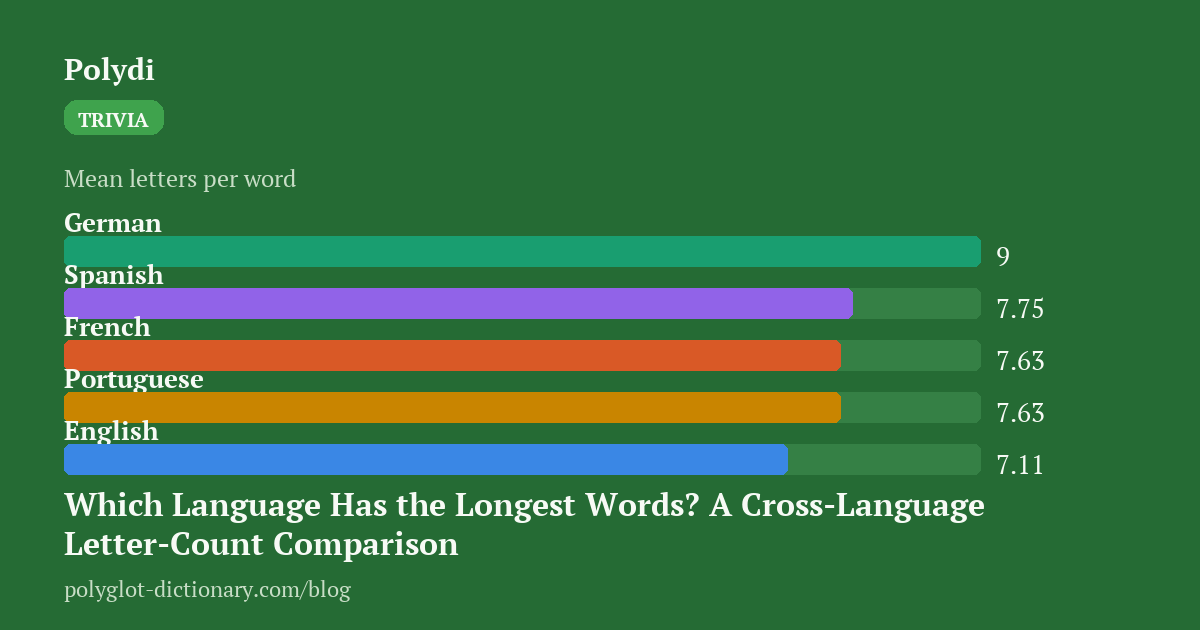
Which Language Has the Longest Words? A Cross-Language Letter-Count Comparison
We counted the letters in every single-word headword across German, Spanish, Portuguese, French and English to find out which language really has the longest words -- and whether harder (higher CEFR level) words are actually longer ones. October 24, 2026 -
Reading Challenge: Die Verwandlung (Part 2) — Gregor Tries to Get Back to Sleep
Part 2 of our weekly reading challenge through Kafka's Die Verwandlung: Gregor looks out at the gloomy weather, fails to roll over, and complains to himself about his miserable job as a travelling salesman. October 23, 2026 -
Reading Challenge: Dom Casmurro (Part 2) — Why He's Writing the Book
Part 2 of our weekly reading challenge through Dom Casmurro: the narrator finishes explaining his odd title, then tells us he lives alone in a house he had built as an exact copy of the one from his childhood. October 23, 2026 -
Reading Challenge: Don Quijote (Part 2) — He Reads Too Many Chivalry Books
Part 2 of our weekly reading challenge through Don Quijote: the famous hook of the whole novel -- our hidalgo reads so many chivalry novels that he neglects his land and starts to lose his mind. October 23, 2026 -
Reading Challenge: Du côté de chez Swann (Part 2) — The Feverish Traveller
Part 2 of our weekly reading challenge through Proust's Du côté de chez Swann: the narrator, still half-asleep, compares himself to a feverish traveller waiting for morning, then drifts into brief, kaleidoscopic moments of half-waking. October 23, 2026 -
Reading Challenge: Pride and Prejudice (Part 2) — Mr. and Mrs. Bennet Bicker
Parte 2 de nuestro desafío de lectura semanal con Pride and Prejudice (Orgullo y prejuicio): la señora Bennet insiste en que su esposo visite al nuevo vecino rico, con la esperanza de que se enamore de una de sus cinco hijas. Él, en cambio, prefiere tomarle el pelo. October 23, 2026 -
Abend: the 58th-Most Reused Word in German
Abend shows up in 12 German compounds, 100% of them nouns -- grouped here by CEFR level and by meaning. October 21, 2026 -
Amt: the 71th-Most Reused Word in German
Amt shows up in 11 German compounds, 100% of them nouns -- grouped here by CEFR level and by meaning. October 21, 2026 -
Arbeit: The Third-Most Reused Word in German (and a Perfect Record)
Third place in our scan of this dictionary's most-reused word component belongs to Arbeit, "work" -- and unlike Haus (one adjective exception) or gehen (one noun exception), every single one of its 30 compounds stays a noun. Zero exceptions. October 21, 2026 -
Bahn: the 49th-Most Reused Word in German
Bahn shows up in 13 German compounds, 100% of them nouns -- grouped here by CEFR level and by meaning. October 21, 2026 -
Bank: the 92th-Most Reused Word in German
Bank shows up in 10 German compounds, 100% of them nouns -- grouped here by CEFR level and by meaning. October 21, 2026 -
Bau: the 62th-Most Reused Word in German
Bau shows up in 12 German compounds, 100% of them nouns -- grouped here by CEFR level and by meaning. October 21, 2026 -
Baum: the 16th-Most Reused Word in German
Baum shows up in 18 German compounds, 100% of them nouns -- grouped here by CEFR level and by meaning. October 21, 2026 -
Bett: the 95th-Most Reused Word in German
Bett shows up in 10 German compounds, 100% of them nouns -- grouped here by CEFR level and by meaning. October 21, 2026 -
Bild: the 74th-Most Reused Word in German
Bild shows up in 11 German compounds, 91% of them nouns -- grouped here by CEFR level and by meaning. October 21, 2026 -
Blume: the 75th-Most Reused Word in German
Blume shows up in 11 German compounds, 91% of them nouns -- grouped here by CEFR level and by meaning. October 21, 2026 -
Brief: the 93th-Most Reused Word in German
Brief shows up in 10 German compounds, 100% of them nouns -- grouped here by CEFR level and by meaning. October 21, 2026 -
bringen: the 23th-Most Reused Word in German
bringen shows up in 16 German compounds, 100% of them verbs -- grouped here by CEFR level and by meaning. October 21, 2026 -
Brot: the 48th-Most Reused Word in German
Brot shows up in 13 German compounds, 100% of them nouns -- grouped here by CEFR level and by meaning. October 21, 2026 -
Buch: the 32th-Most Reused Word in German
Buch shows up in 15 German compounds, 100% of them nouns -- grouped here by CEFR level and by meaning. October 21, 2026 -
Bund: the 27th-Most Reused Word in German
Bund shows up in 16 German compounds, 94% of them nouns -- grouped here by CEFR level and by meaning. October 21, 2026 -
dazu: the 98th-Most Reused Word in German
dazu shows up in 10 German compounds, 100% of them verbs -- grouped here by CEFR level and by meaning. October 21, 2026 -
Dienst: the 68th-Most Reused Word in German
Dienst shows up in 11 German compounds, 82% of them nouns -- grouped here by CEFR level and by meaning. October 21, 2026 -
drehen: the 57th-Most Reused Word in German
drehen shows up in 12 German compounds, 75% of them verbs -- grouped here by CEFR level and by meaning. October 21, 2026 -
Eis: the 28th-Most Reused Word in German
Eis shows up in 16 German compounds, 100% of them nouns -- grouped here by CEFR level and by meaning. October 21, 2026 -
Fach: the 56th-Most Reused Word in German
Fach shows up in 13 German compounds, 85% of them nouns -- grouped here by CEFR level and by meaning. October 21, 2026 -
fahren: the Fifth-Most Reused Word in German
fahren shows up in 27 German compounds -- mostly about direction, a few figurative, and a handful of nouns about driving itself. October 21, 2026 -
Fahrt: the 63th-Most Reused Word in German
Fahrt shows up in 12 German compounds, 100% of them nouns -- grouped here by CEFR level and by meaning. October 21, 2026 -
fallen: the 13th-Most Reused Word in German
fallen shows up in 20 German compounds, 80% of them verbs -- grouped here by CEFR level and by meaning. October 21, 2026 -
fest: the 11th-Most Reused Word in German
fest shows up in 22 German compounds, 82% of them verbs -- grouped here by CEFR level and by meaning. October 21, 2026 -
Fest: the 55th-Most Reused Word in German
Fest shows up in 13 German compounds, 92% of them nouns -- grouped here by CEFR level and by meaning. October 21, 2026 -
Fisch: the 100th-Most Reused Word in German
Fisch shows up in 10 German compounds, 100% of them nouns -- grouped here by CEFR level and by meaning. October 21, 2026 -
Flasche: the 91th-Most Reused Word in German
Flasche shows up in 10 German compounds, 100% of them nouns -- grouped here by CEFR level and by meaning. October 21, 2026 -
Flug: the 96th-Most Reused Word in German
Flug shows up in 10 German compounds, 100% of them nouns -- grouped here by CEFR level and by meaning. October 21, 2026 -
frei: the 44th-Most Reused Word in German
frei shows up in 14 German compounds, 50% of them nouns -- grouped here by CEFR level and by meaning. October 21, 2026 -
führen: the 41th-Most Reused Word in German
führen shows up in 14 German compounds, 100% of them verbs -- grouped here by CEFR level and by meaning. October 21, 2026 -
Garten: the 38th-Most Reused Word in German
Garten shows up in 15 German compounds, 100% of them nouns -- grouped here by CEFR level and by meaning. October 21, 2026 -
geben: the 45th-Most Reused Word in German
geben shows up in 14 German compounds, 100% of them verbs -- grouped here by CEFR level and by meaning. October 21, 2026 -
gehen: The Second-Most Reused Word in German (and a Different Kind of Family)
After Haus, the next word our scan found reused the most often isn't a noun at all -- it's the verb gehen, "to go," stitched into 33 different words through German's other favourite trick: prefixes, not compounds. October 21, 2026 -
Geschäft: the 40th-Most Reused Word in German
Geschäft shows up in 15 German compounds, 93% of them nouns -- grouped here by CEFR level and by meaning. October 21, 2026 -
Glas: the 50th-Most Reused Word in German
Glas shows up in 13 German compounds, 100% of them nouns -- grouped here by CEFR level and by meaning. October 21, 2026 -
Grund: the 65th-Most Reused Word in German
Grund shows up in 12 German compounds, 100% of them nouns -- grouped here by CEFR level and by meaning. October 21, 2026 -
Haar: the 80th-Most Reused Word in German
Haar shows up in 11 German compounds, 82% of them nouns -- grouped here by CEFR level and by meaning. October 21, 2026 -
halten: the 17th-Most Reused Word in German
halten shows up in 17 German compounds, 88% of them verbs -- grouped here by CEFR level and by meaning. October 21, 2026 -
Hand: the 14th-Most Reused Word in German
Hand shows up in 20 German compounds, 90% of them nouns -- grouped here by CEFR level and by meaning. October 21, 2026 -
Haupt: the 47th-Most Reused Word in German
Haupt shows up in 14 German compounds, 93% of them nouns -- grouped here by CEFR level and by meaning. October 21, 2026 -
hoch: the 53th-Most Reused Word in German
hoch shows up in 13 German compounds, 85% of them nouns -- grouped here by CEFR level and by meaning. October 21, 2026 -
Holz: the 76th-Most Reused Word in German
Holz shows up in 11 German compounds, 100% of them nouns -- grouped here by CEFR level and by meaning. October 21, 2026 -
hängen: the 82th-Most Reused Word in German
hängen shows up in 10 German compounds, 60% of them verbs -- grouped here by CEFR level and by meaning. October 21, 2026 -
Jahr: the 29th-Most Reused Word in German
Jahr shows up in 16 German compounds, 94% of them nouns -- grouped here by CEFR level and by meaning. October 21, 2026 -
Kaffee: the 79th-Most Reused Word in German
Kaffee shows up in 11 German compounds, 100% of them nouns -- grouped here by CEFR level and by meaning. October 21, 2026 -
Karte: the 22th-Most Reused Word in German
Karte shows up in 17 German compounds, 100% of them nouns -- grouped here by CEFR level and by meaning. October 21, 2026 -
kommen: The Fourth-Most Reused Word in German (and Another Clean Sweep)
After Haus, gehen and Arbeit comes kommen: 28 compounds, 100% verbs, no exceptions -- plus a look at what those 28 words actually mean once you group them by role instead of difficulty. October 21, 2026 -
Kopf: the 54th-Most Reused Word in German
Kopf shows up in 13 German compounds, 85% of them nouns -- grouped here by CEFR level and by meaning. October 21, 2026 -
Kuchen: the 35th-Most Reused Word in German
Kuchen shows up in 15 German compounds, 100% of them nouns -- grouped here by CEFR level and by meaning. October 21, 2026 -
Land: the 30th-Most Reused Word in German
Land shows up in 15 German compounds, 100% of them nouns -- grouped here by CEFR level and by meaning. October 21, 2026 -
lassen: the 21th-Most Reused Word in German
lassen shows up in 17 German compounds, 88% of them verbs -- grouped here by CEFR level and by meaning. October 21, 2026 -
laufen: the 12th-Most Reused Word in German
laufen shows up in 21 German compounds, 90% of them verbs -- grouped here by CEFR level and by meaning. October 21, 2026 -
legen: the 18th-Most Reused Word in German
legen shows up in 17 German compounds, 100% of them verbs -- grouped here by CEFR level and by meaning. October 21, 2026 -
Luft: the 81th-Most Reused Word in German
Luft shows up in 10 German compounds, 100% of them nouns -- grouped here by CEFR level and by meaning. October 21, 2026 -
machen: the 42th-Most Reused Word in German
machen shows up in 14 German compounds, 100% of them verbs -- grouped here by CEFR level and by meaning. October 21, 2026 -
Mann: the 99th-Most Reused Word in German
Mann shows up in 10 German compounds, 100% of them nouns -- grouped here by CEFR level and by meaning. October 21, 2026 -
Markt: the 67th-Most Reused Word in German
Markt shows up in 11 German compounds, 100% of them nouns -- grouped here by CEFR level and by meaning. October 21, 2026 -
nehmen: the 19th-Most Reused Word in German
nehmen shows up in 17 German compounds, 100% of them verbs -- grouped here by CEFR level and by meaning. October 21, 2026 -
Platz: the 51th-Most Reused Word in German
Platz shows up in 13 German compounds, 100% of them nouns -- grouped here by CEFR level and by meaning. October 21, 2026 -
Raum: the 85th-Most Reused Word in German
Raum shows up in 10 German compounds, 100% of them nouns -- grouped here by CEFR level and by meaning. October 21, 2026 -
rechnen: the 66th-Most Reused Word in German
rechnen shows up in 11 German compounds, 73% of them verbs -- grouped here by CEFR level and by meaning. October 21, 2026 -
reich: the 86th-Most Reused Word in German
reich shows up in 10 German compounds, 100% of them adjectives -- grouped here by CEFR level and by meaning. October 21, 2026 -
Reise: the 90th-Most Reused Word in German
Reise shows up in 10 German compounds, 100% of them nouns -- grouped here by CEFR level and by meaning. October 21, 2026 -
reißen: the 83th-Most Reused Word in German
reißen shows up in 10 German compounds, 100% of them verbs -- grouped here by CEFR level and by meaning. October 21, 2026 -
schauen: the 34th-Most Reused Word in German
schauen shows up in 15 German compounds, 93% of them verbs -- grouped here by CEFR level and by meaning. October 21, 2026 -
schlagen: the 25th-Most Reused Word in German
schlagen shows up in 16 German compounds, 94% of them verbs -- grouped here by CEFR level and by meaning. October 21, 2026 -
schneiden: the 69th-Most Reused Word in German
schneiden shows up in 11 German compounds, 82% of them verbs -- grouped here by CEFR level and by meaning. October 21, 2026 -
schreiben: the 31th-Most Reused Word in German
schreiben shows up in 15 German compounds, 73% of them verbs -- grouped here by CEFR level and by meaning. October 21, 2026 -
Schuh: the 64th-Most Reused Word in German
Schuh shows up in 12 German compounds, 100% of them nouns -- grouped here by CEFR level and by meaning. October 21, 2026 -
Schule: the 15th-Most Reused Word in German
Schule shows up in 19 German compounds, 100% of them nouns -- grouped here by CEFR level and by meaning. October 21, 2026 -
See: the 97th-Most Reused Word in German
See shows up in 10 German compounds, 100% of them nouns -- grouped here by CEFR level and by meaning. October 21, 2026 -
sehen: the 20th-Most Reused Word in German
sehen shows up in 17 German compounds, 94% of them verbs -- grouped here by CEFR level and by meaning. October 21, 2026 -
setzen: the Seventh-Most Reused Word in German
setzen shows up in 25 German compounds, 88% of them verbs -- grouped here by CEFR level and by meaning. October 21, 2026 -
Spiel: the 26th-Most Reused Word in German
Spiel shows up in 16 German compounds, 100% of them nouns -- grouped here by CEFR level and by meaning. October 21, 2026 -
spielen: the 59th-Most Reused Word in German
spielen shows up in 12 German compounds, 92% of them verbs -- grouped here by CEFR level and by meaning. October 21, 2026 -
Sport: the 89th-Most Reused Word in German
Sport shows up in 10 German compounds, 100% of them nouns -- grouped here by CEFR level and by meaning. October 21, 2026 -
sprechen: the 84th-Most Reused Word in German
sprechen shows up in 10 German compounds, 80% of them verbs -- grouped here by CEFR level and by meaning. October 21, 2026 -
springen: the 72th-Most Reused Word in German
springen shows up in 11 German compounds, 91% of them verbs -- grouped here by CEFR level and by meaning. October 21, 2026 -
Stadt: the 87th-Most Reused Word in German
Stadt shows up in 10 German compounds, 100% of them nouns -- grouped here by CEFR level and by meaning. October 21, 2026 -
stehen: the 43th-Most Reused Word in German
stehen shows up in 14 German compounds, 86% of them verbs -- grouped here by CEFR level and by meaning. October 21, 2026 -
steigen: the 60th-Most Reused Word in German
steigen shows up in 12 German compounds, 92% of them verbs -- grouped here by CEFR level and by meaning. October 21, 2026 -
Stein: the 73th-Most Reused Word in German
Stein shows up in 11 German compounds, 100% of them nouns -- grouped here by CEFR level and by meaning. October 21, 2026 -
stellen: the Eighth-Most Reused Word in German
stellen shows up in 24 German compounds, 96% of them verbs -- grouped here by CEFR level and by meaning. October 21, 2026 -
Straße: the 77th-Most Reused Word in German
Straße shows up in 11 German compounds, 100% of them nouns -- grouped here by CEFR level and by meaning. October 21, 2026 -
Suppe: the 39th-Most Reused Word in German
Suppe shows up in 15 German compounds, 100% of them nouns -- grouped here by CEFR level and by meaning. October 21, 2026 -
Tag: the 94th-Most Reused Word in German
Tag shows up in 10 German compounds, 90% of them nouns -- grouped here by CEFR level and by meaning. October 21, 2026 -
Tasche: the 33th-Most Reused Word in German
Tasche shows up in 15 German compounds, 100% of them nouns -- grouped here by CEFR level and by meaning. October 21, 2026 -
tragen: the 37th-Most Reused Word in German
tragen shows up in 15 German compounds, 93% of them verbs -- grouped here by CEFR level and by meaning. October 21, 2026 -
treten: the 70th-Most Reused Word in German
treten shows up in 11 German compounds, 100% of them verbs -- grouped here by CEFR level and by meaning. October 21, 2026 -
Tür: the 24th-Most Reused Word in German
Tür shows up in 16 German compounds, 100% of them nouns -- grouped here by CEFR level and by meaning. October 21, 2026 -
voll: the 88th-Most Reused Word in German
voll shows up in 10 German compounds, 50% of them adjectives -- grouped here by CEFR level and by meaning. October 21, 2026 -
Wagen: the 78th-Most Reused Word in German
Wagen shows up in 11 German compounds, 100% of them nouns -- grouped here by CEFR level and by meaning. October 21, 2026 -
Wald: the 101th-Most Reused Word in German
Wald shows up in 10 German compounds, 100% of them nouns -- grouped here by CEFR level and by meaning. October 21, 2026 -
Wasser: the Eighth-Most Reused Word in German
Wasser shows up in 25 German compounds, 96% of them nouns -- grouped here by CEFR level and by meaning. October 21, 2026 -
Wein: the 52th-Most Reused Word in German
Wein shows up in 13 German compounds, 100% of them nouns -- grouped here by CEFR level and by meaning. October 21, 2026 -
werfen: the 46th-Most Reused Word in German
werfen shows up in 14 German compounds, 100% of them verbs -- grouped here by CEFR level and by meaning. October 21, 2026 -
Werk: the 61th-Most Reused Word in German
Werk shows up in 12 German compounds, 100% of them nouns -- grouped here by CEFR level and by meaning. October 21, 2026 -
Zeit: the Ninth-Most Reused Word in German
Zeit shows up in 24 German compounds, 96% of them nouns -- grouped here by CEFR level and by meaning. October 21, 2026 -
ziehen: the Sixth-Most Reused Word in German
ziehen shows up in 26 German compounds, 96% of them verbs -- grouped here by CEFR level and by meaning. October 21, 2026 -
Zimmer: the 36th-Most Reused Word in German
Zimmer shows up in 15 German compounds, 100% of them nouns -- grouped here by CEFR level and by meaning. October 21, 2026 -
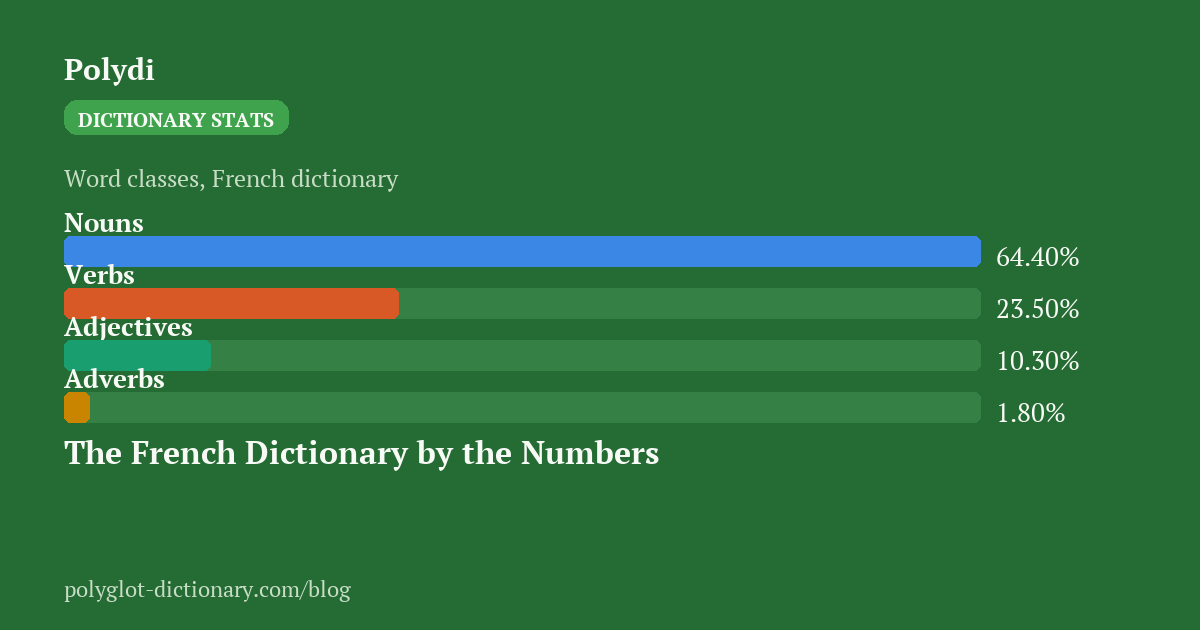
The French Dictionary by the Numbers
We ran the numbers on all 9,498 French entries in this dictionary: the real noun/verb/adjective/adverb split, and exactly how the masculine/feminine divide breaks down among French nouns. October 18, 2026 -
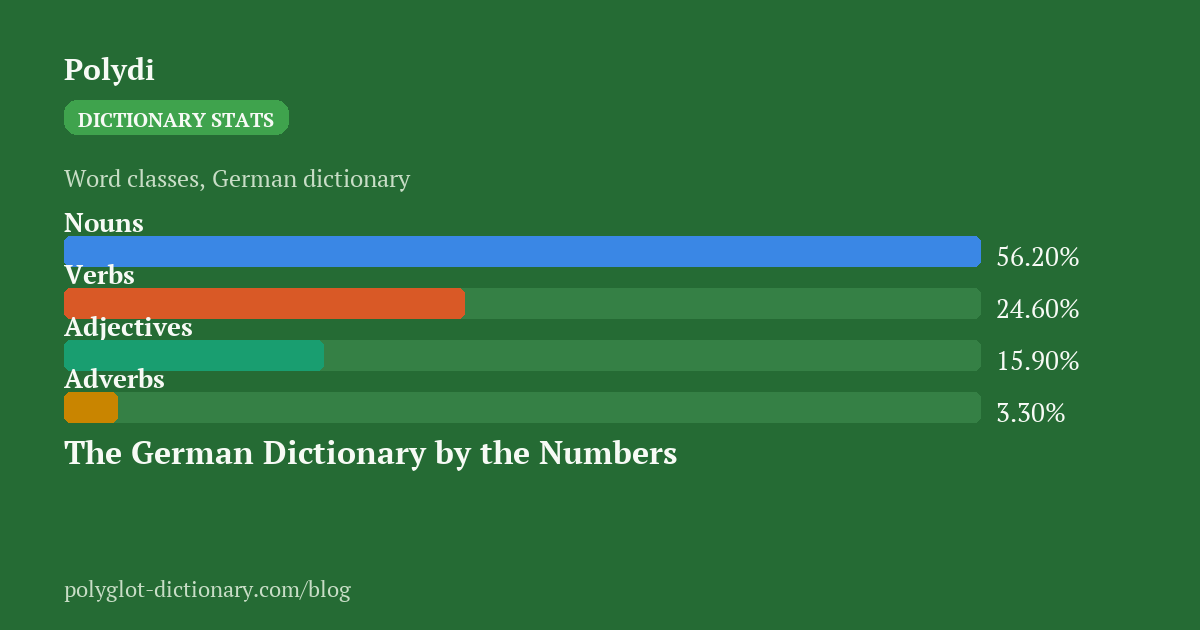
The German Dictionary by the Numbers
We ran the numbers on all 14,540 German entries in this dictionary: the real noun/verb/adjective/adverb split, and -- since German is the only one of our four languages with three genders -- exactly how der/die/das divide up. October 18, 2026 -
Haus: The Word Hiding Inside 47 Dictionary Entries
We scanned every tagged compound in our German dictionary to find the single most reused building block. The winner, Haus, turns up in 46 different compound words -- and its position inside each one even predicts the compound's gender. October 18, 2026 -
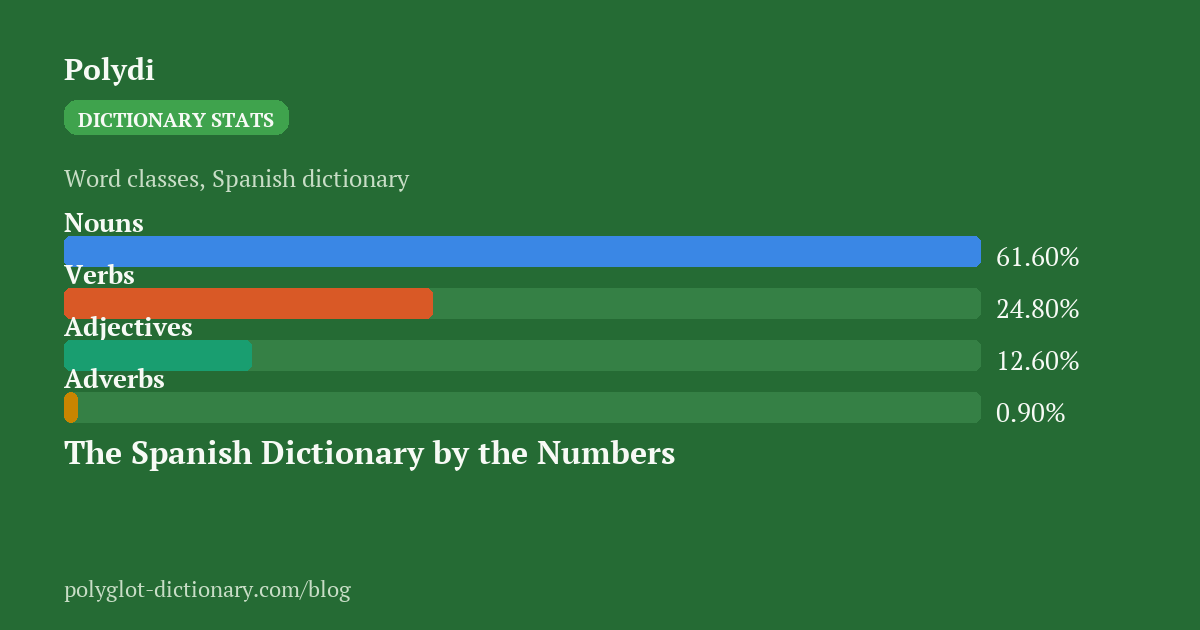
The Spanish Dictionary by the Numbers
We ran the numbers on all 12,440 Spanish entries in this dictionary: the real noun/verb/adjective/adverb split, and -- since Spanish nouns are always either masculine or feminine, never neuter -- exactly how that 55/45 divide breaks down. October 18, 2026 -
o problema, not a problema: Portuguese's Gender Exceptions
a casa, o problema: Portuguese nouns ending in -a are supposed to be feminine, but o problema isn't alone -- dozens of everyday words break the rule in a handful of clear, learnable patterns. October 10, 2026 -
Reading Challenge: Die Verwandlung — Gregor Wakes Up as an Insect
A 20-minute challenge: read the real opening of Franz Kafka's Die Verwandlung in German, using this site's gender colours and word-saving -- no simplification, the actual 1915 text. October 10, 2026 -
Reading Challenge: Dom Casmurro — How the Narrator Got His Nickname
A 20-minute challenge: read the real opening of Machado de Assis's Dom Casmurro in Portuguese, using this site's gender colours and word-saving -- no simplification, the actual 1899 text. October 10, 2026 -
Reading Challenge: Don Quijote — An Unnamed Gentleman of La Mancha
A 20-minute challenge: read the real opening of Cervantes's Don Quijote in Spanish, using this site's gender colours and word-saving -- no simplification, the actual 1605 text. October 10, 2026 -
Reading Challenge: Du côté de chez Swann — A Night of Half-Sleep and Memory
A 20-minute challenge: read the real opening of Marcel Proust's Du côté de chez Swann in French, using this site's gender colours and word-saving -- no simplification, the actual 1913 text. October 10, 2026 -
Desafío de Lectura: Pride and Prejudice — La Señora Bennet Escucha un Chisme del Vecindario
Un desafío de 20 minutos: lee un resumen en español de Pride and Prejudice de Jane Austen y luego el texto real en inglés, sin simplificar, con la herramienta de guardar vocabulario de esta página. October 10, 2026 -
la maison, not le maison: French's Other Gender Spelling Trap
le bouton really is masculine. la maison looks like it should be too, but isn't -- because -son hides inside -on, and the two endings predict opposite genders. Here's the trap across four French endings. October 9, 2026 -
Donaudampfschifffahrtsgesellschaftskapitän: One Rule Behind Germany's Giant Words
German doesn't borrow long words from Latin -- it just glues short ones together, as many as it needs. The grammar is almost too simple: whatever gender the pieces start with, the LAST one always wins. October 9, 2026 -
der Kuchen, not das Kuchen: German's Gender Spelling Traps
das Mädchen ends in -chen and is neuter, just like the rule says. der Kuchen ends in the same four letters and is masculine. Here's the trap hiding behind five German gender patterns. October 9, 2026 -
Why Is problema Masculine? Spanish's Gender Exceptions
la casa, el problema: Spanish nouns ending in -a are supposed to be feminine, but 191 of them aren't. Here's why, in four clear patterns. October 9, 2026 -
Dictionary Insights
A live look at the whole dictionary: levels, word classes, near-synonym coverage, and how much blog content we've built.