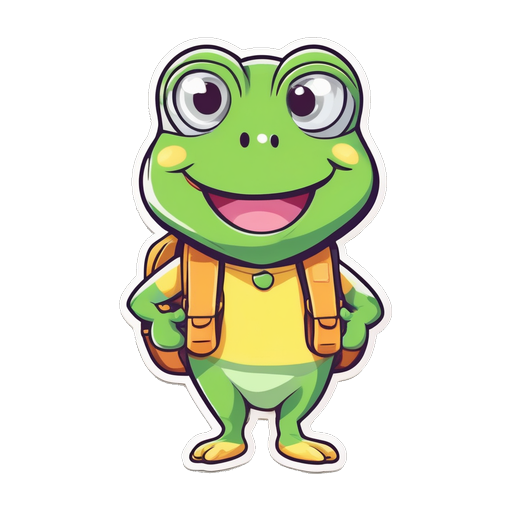
Meet Polydi
Polydi is the adventurous, curious frog behind this dictionary — always jumping after one
more word, following each entry's links just to see where they lead.
He's honest about what he knows and what he doesn't yet, so every entry comes with a quick
practice question. And he likes keeping track of things, which is exactly why "My words"
exists: save a word, and Polydi makes sure you actually come back and test yourself on it.
Jump in. Learn a word. Test yourself.
- Curious
- Honest
- Keeps track
Conoce a Polydi
Polydi es la rana aventurera y curiosa detrás de este diccionario — siempre saltando
detrás de una palabra más, siguiendo los enlaces de cada entrada solo para ver adónde
llevan.
Es honesto sobre lo que sabe y lo que todavía no, por eso cada entrada viene con una
pregunta de práctica rápida. Y le gusta llevar la cuenta de las cosas, por eso existe "Mis
palabras": guarda una palabra y Polydi se asegura de que vuelvas a ponerte a prueba con
ella.
Salta. Aprende una palabra. Ponte a prueba.
- Curioso
- Honesto
- Lleva la cuenta
Conheça o Polydi
Polydi é o sapo aventureiro e curioso por trás deste dicionário — sempre pulando atrás de
mais uma palavra, seguindo os links de cada entrada só para ver aonde eles levam.
Ele é honesto sobre o que sabe e o que ainda não sabe, por isso cada entrada vem com uma
pergunta rápida de prática. E ele gosta de acompanhar tudo, por isso existe "Minhas palavras":
salve uma palavra e o Polydi garante que você volte para se testar nela.
Pule. Aprenda uma palavra. Teste-se.
- Curioso
- Honesto
- Organizado
Polydi से मिलिए
Polydi इस शब्दकोश के पीछे का साहसी और जिज्ञासु मेंढक है — हमेशा एक और शब्द के पीछे
छलाँग लगाता हुआ, हर प्रविष्टि के लिंक बस यह देखने के लिए खोलता है कि वे कहाँ ले जाते हैं।
वह ईमानदार है कि उसे क्या पता है और क्या अभी नहीं, इसलिए हर प्रविष्टि के साथ एक छोटा
अभ्यास-प्रश्न आता है। और उसे हर चीज़ का हिसाब रखना पसंद है, इसीलिए "मेरे शब्द" है: कोई शब्द
सहेजिए, और Polydi पक्का करेगा कि आप लौटकर उस पर ख़ुद को परखें।
छलाँग लगाइए। एक शब्द सीखिए। ख़ुद को परखिए।
- जिज्ञासु
- ईमानदार
- हिसाब रखने वाला
